GovTech, Mobile UX, Design Systems
OTIS 2.0: Modernizing Citation Workflows for the Ohio State Highway Patrol
A design-system-first rebuild of legacy roadside citation software: offline autosave, lower cognitive load, and accessibility tuned for troopers working one-handed, in sunlight, on motorcycle units.
Ohio State Highway Patrol
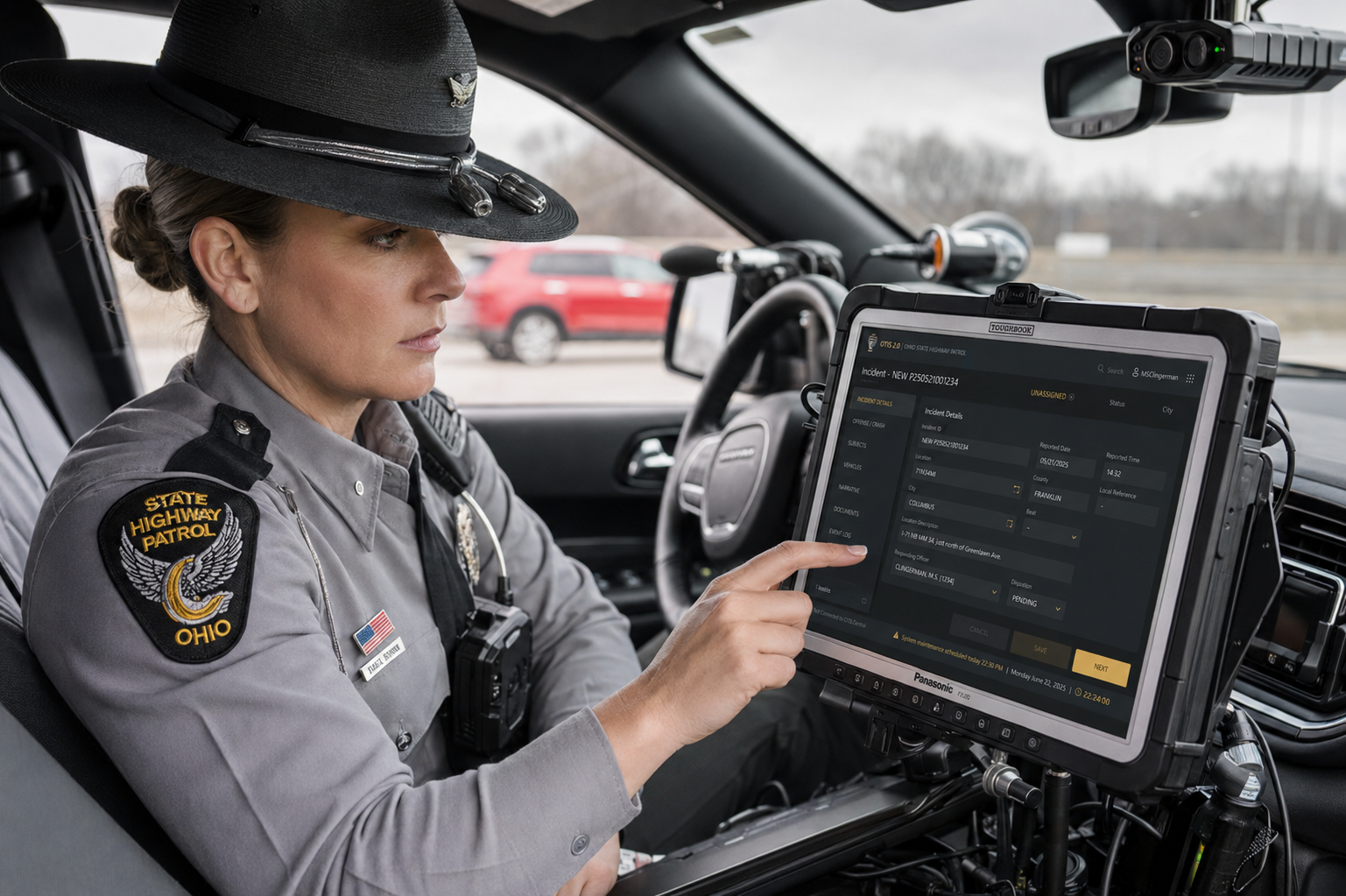
- 01 Problem
A 17-year-old citation system forced long, compliance-heavy forms roadside on unreliable connections, and lost unsaved work, pushing some troopers to draft in Word.
- 02 Approach
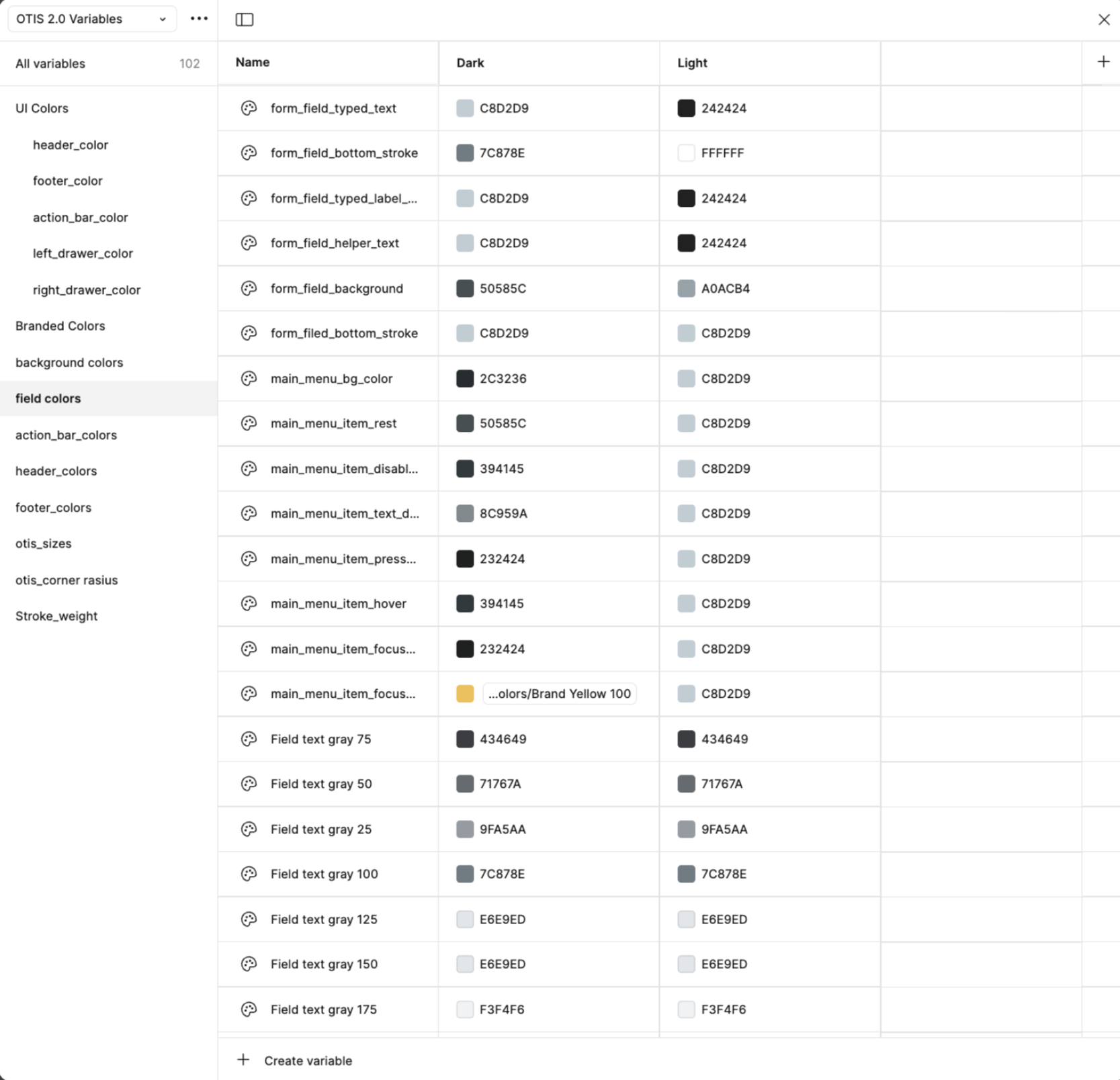
Ride-alongs and contextual inquiry drove a progressive data-entry model, built on governed Fluent UI tokens and Figma variables with an offline-first architecture.
- 03 Outcome
A tokenized, offline-resilient workflow with event-based autosave, reusable person/vehicle entities, and accessibility tuned for troopers averaging 48-60 years old.
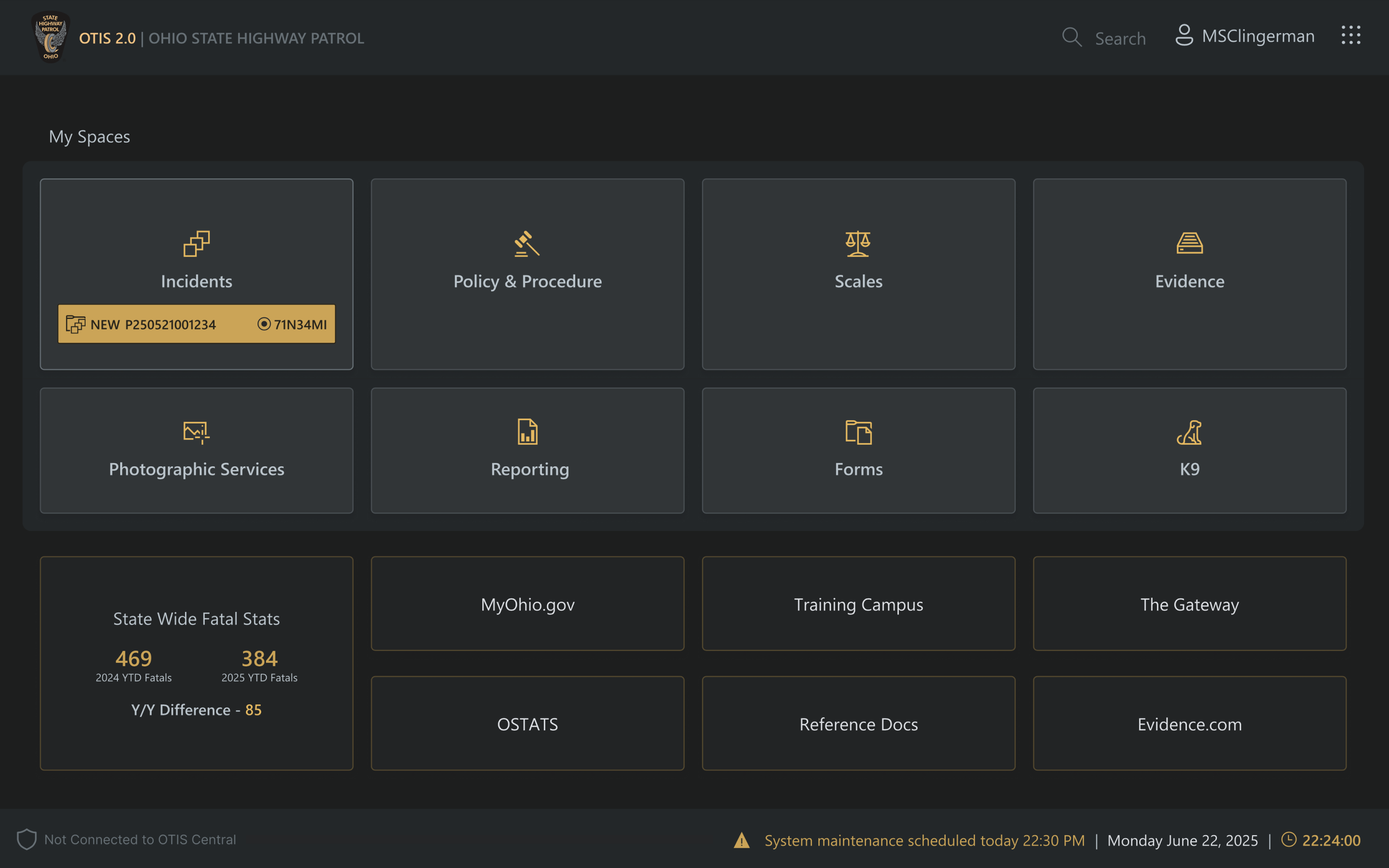
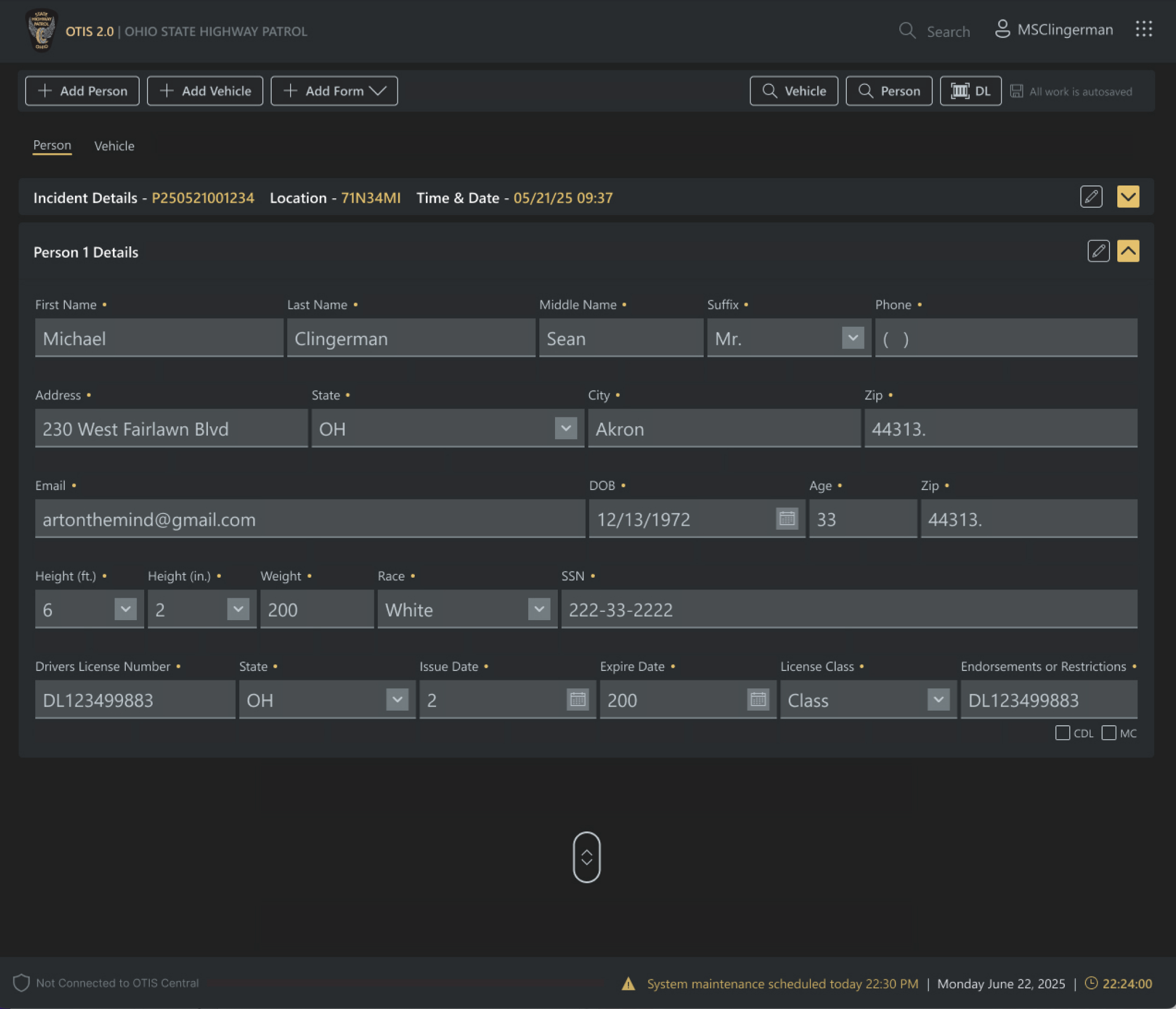
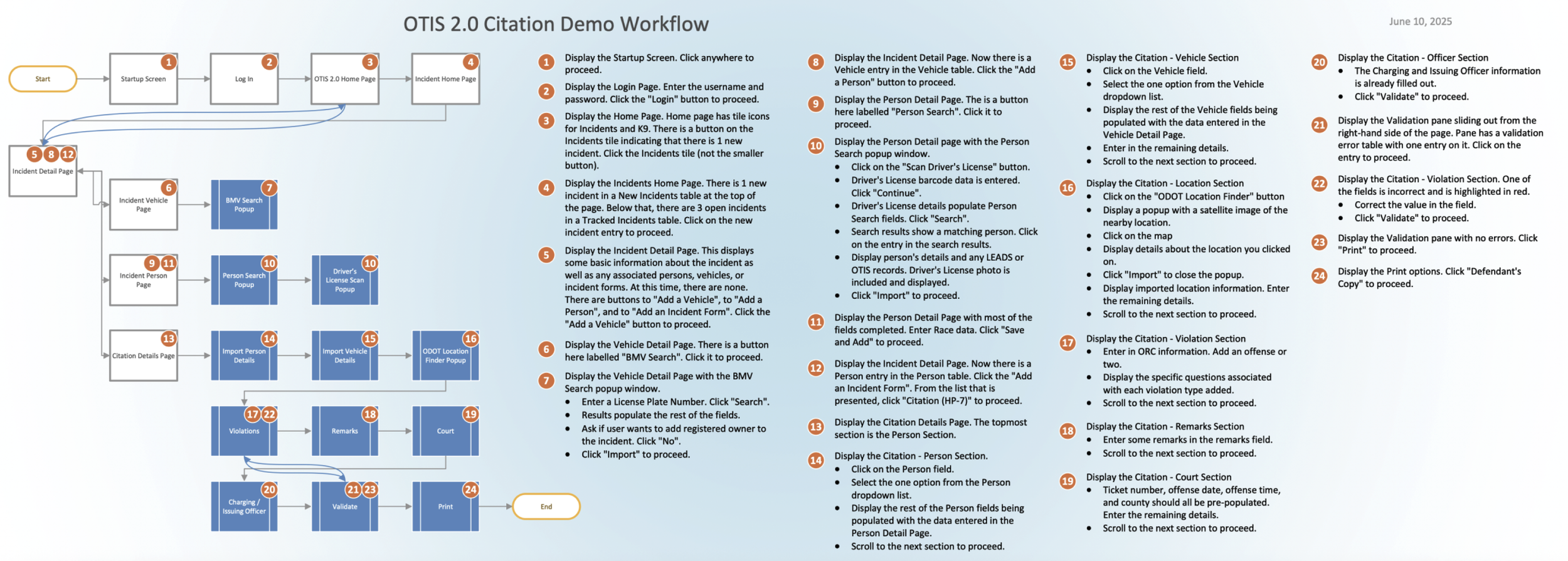
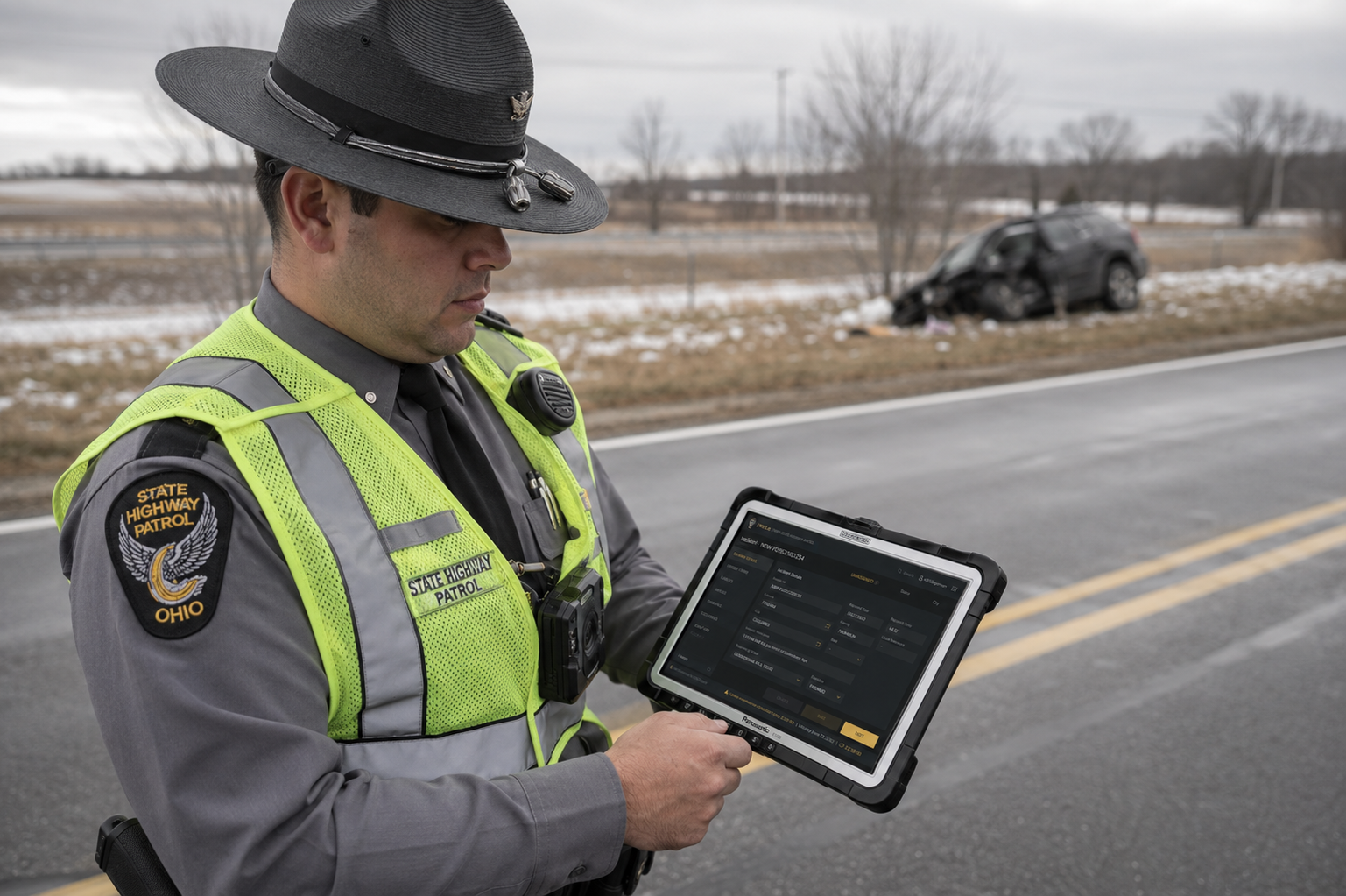
The problem
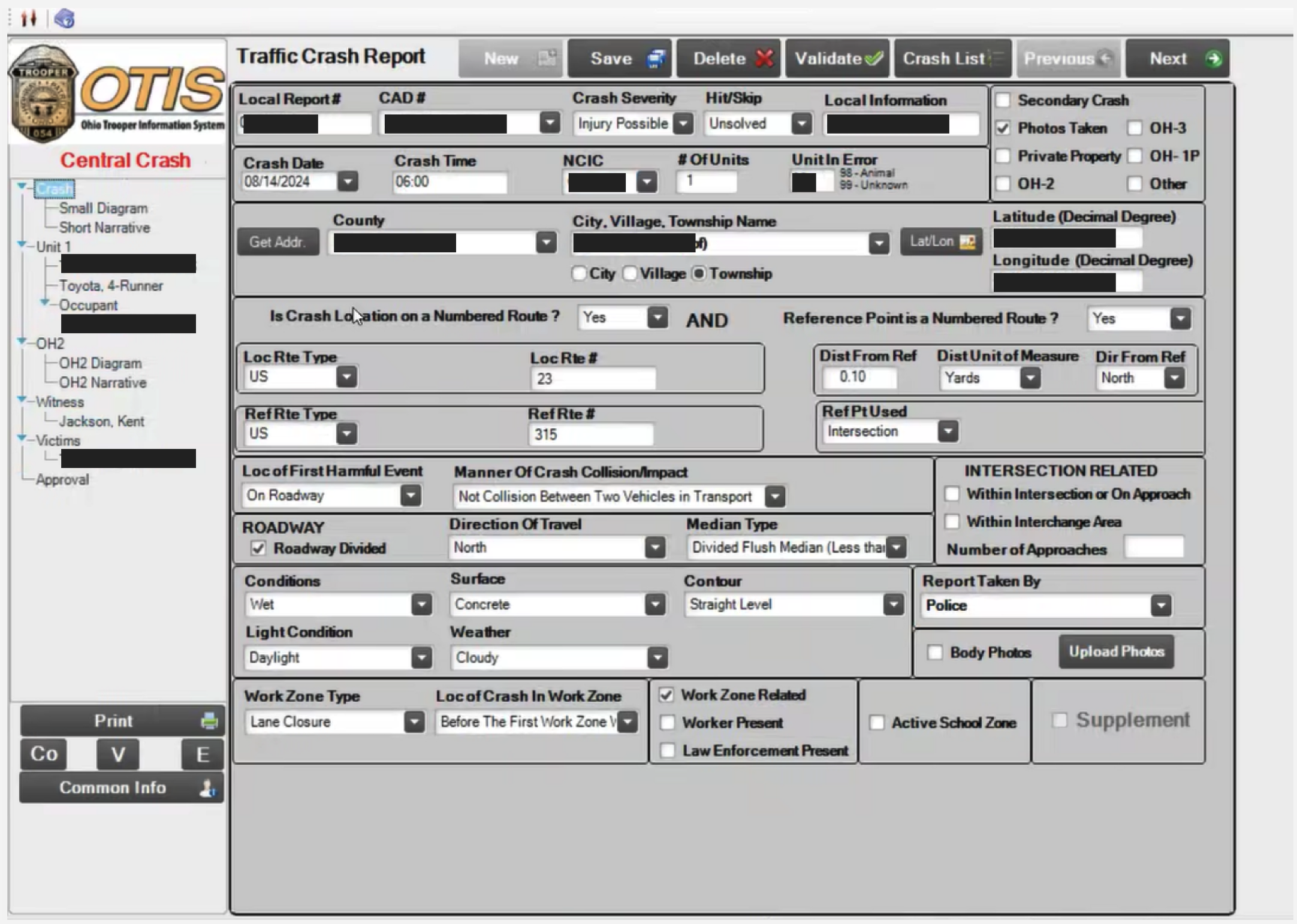
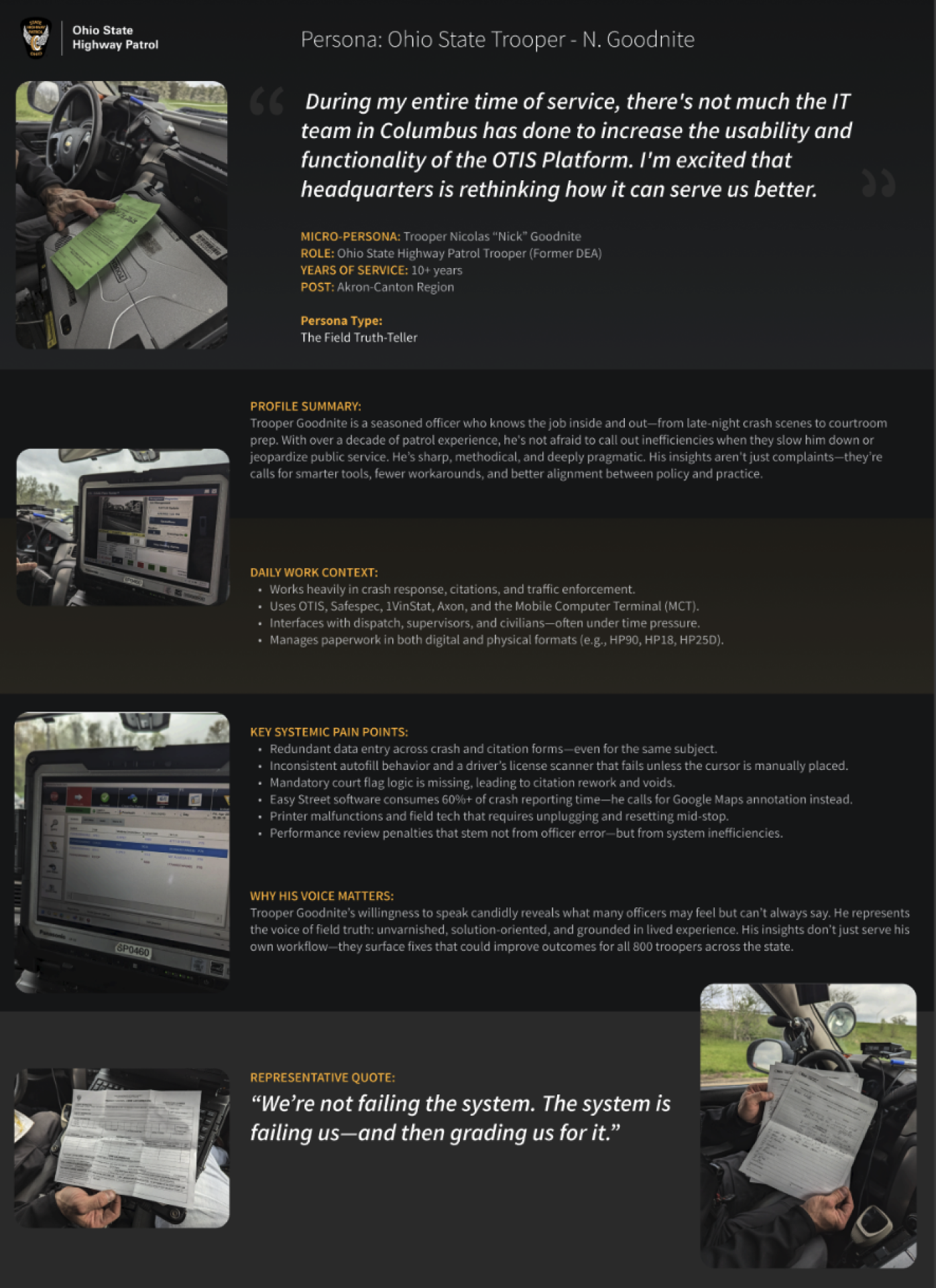
The legacy patrol and citation system required long, compliance-heavy forms completed at the roadside, often with unreliable connectivity. Unsaved work could vanish on a refresh, so some troopers drafted citations in Word as a workaround. Inconsistent ASP.NET screens raised error risk, slowed training, and eroded trust, compounded by high cognitive load from legal and jurisdictional data entry, and duplicate person/vehicle entry with little validation.
The approach
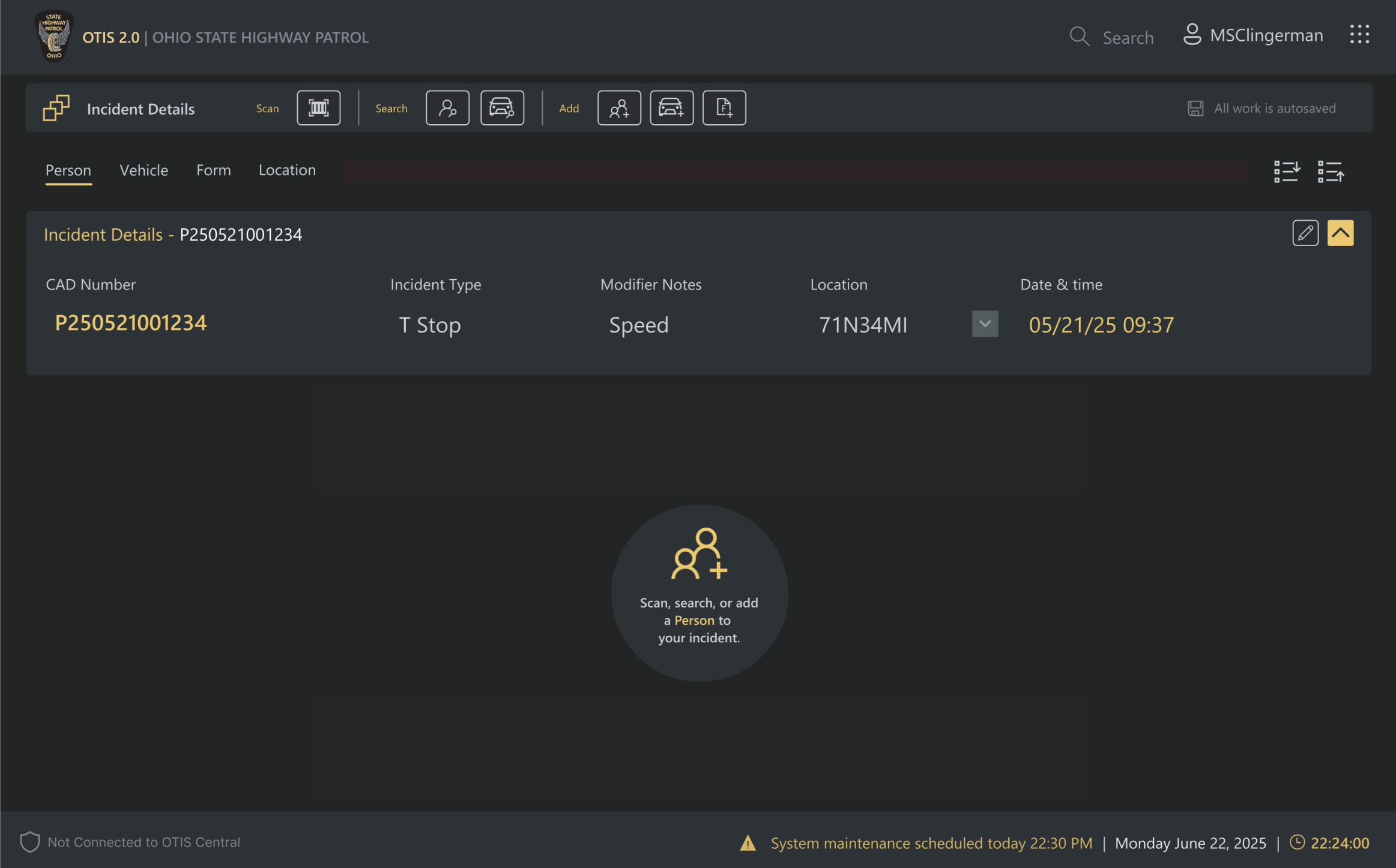
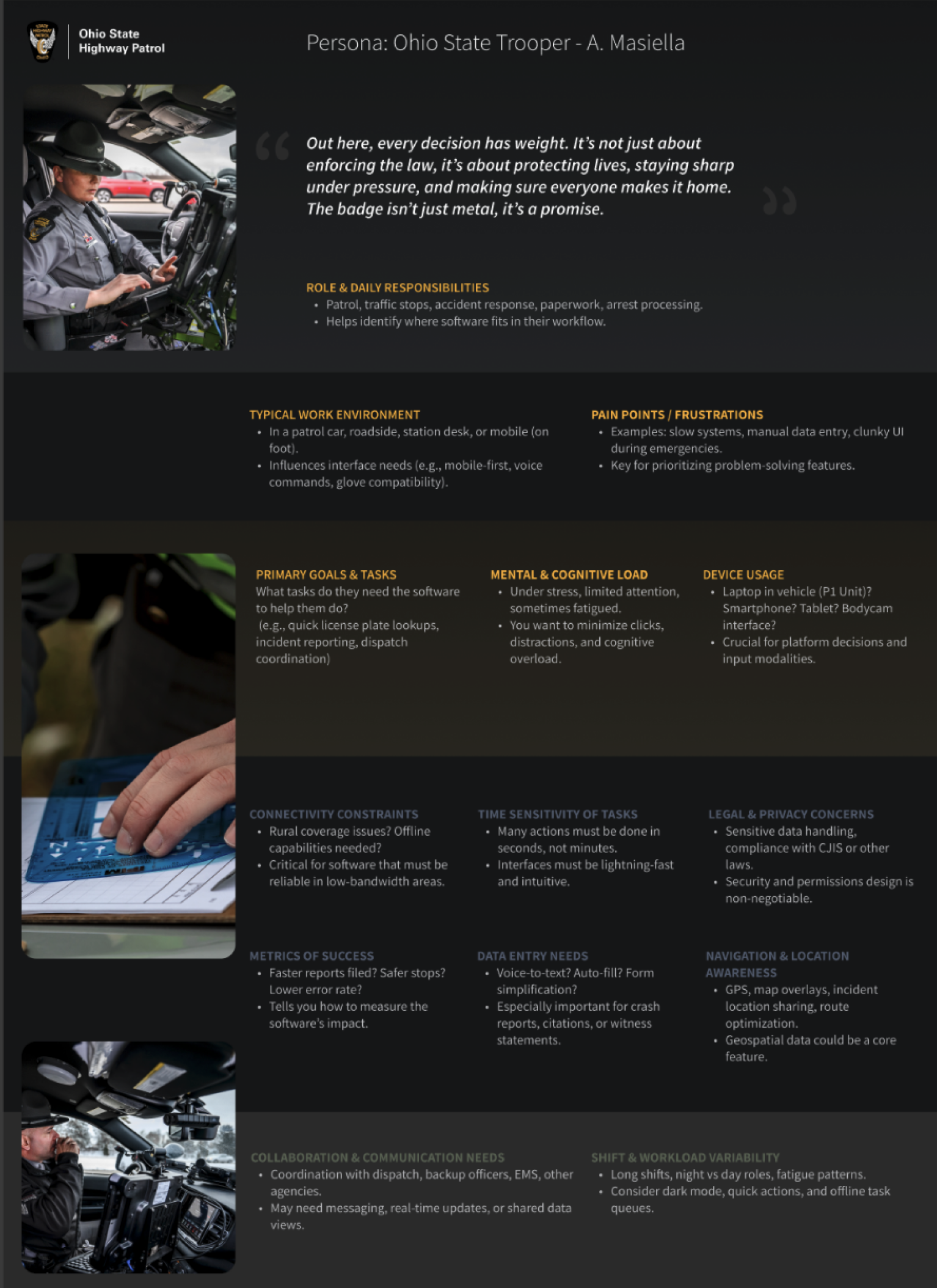
Field and ethnographic research paired with a design-system-first rebuild. Ride-alongs, interviews, and task analyses produced trooper personas and a map of the real roadside workflow. On that foundation: a progressive data-entry model to reduce cognitive load, Fluent UI patterns with governed tokens and Figma variables for consistency, and an instrumentation plan (time-to-complete, draft loss, error hotspots) tied to an offline-first strategy.
Accessibility, by the numbers
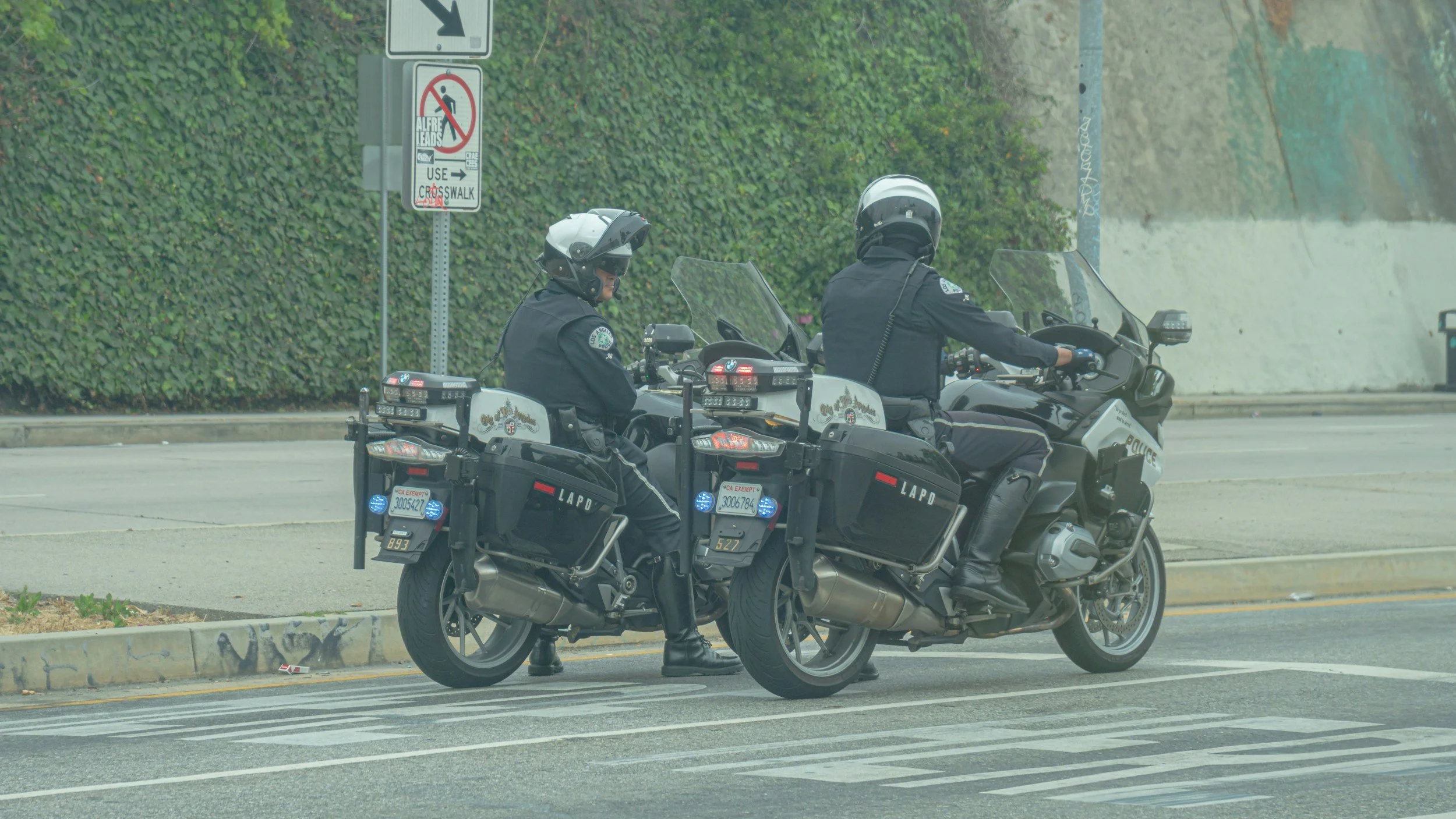
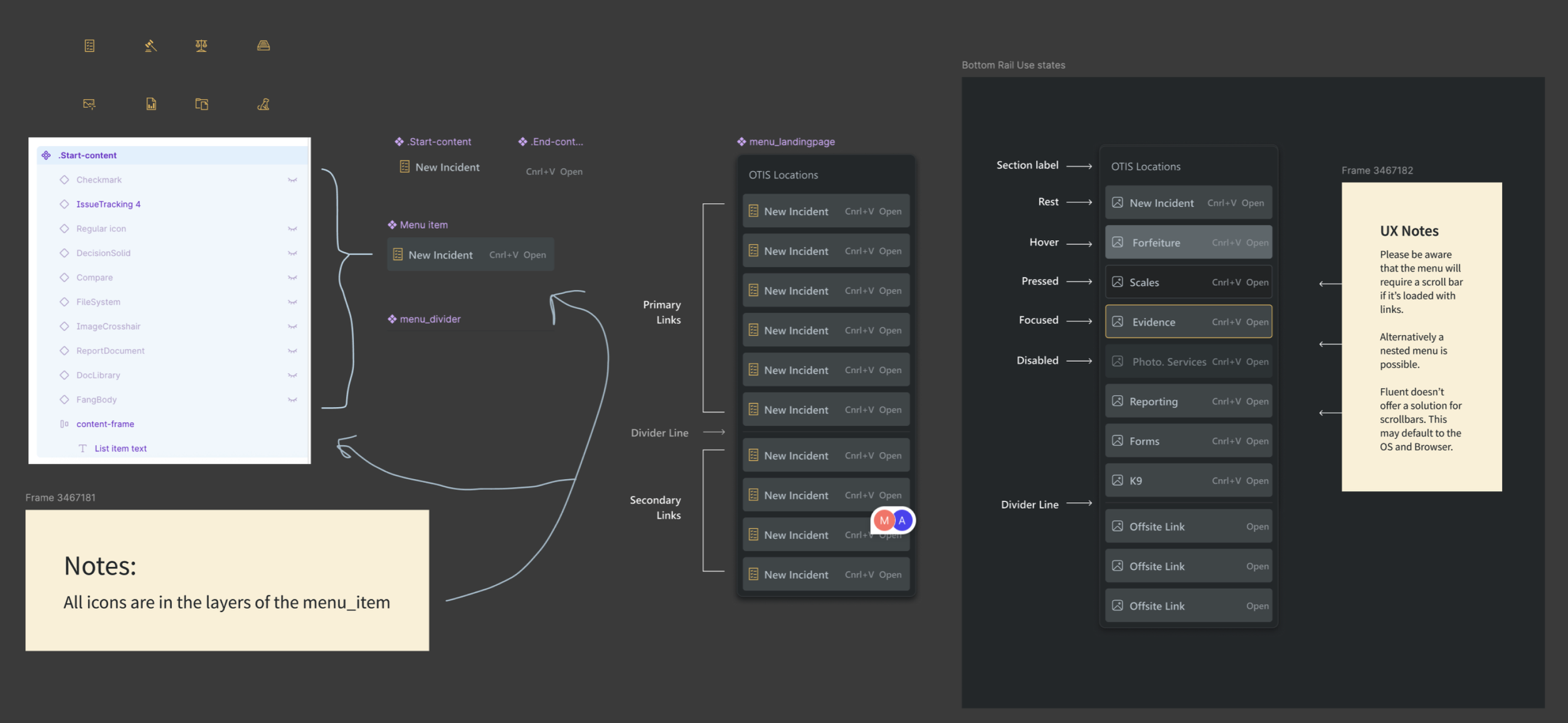
Troopers average 48-60 years old, and roughly 80% over 50 use reading glasses. Defaults shifted to large type (18px body, scalable), high contrast, and clear hierarchy. Interactive controls use 44x44px minimum hit targets with bold focus states. Large/XL density tokens let whole layouts scale, and critical actions (submit, save, cancel) sit in consistent, thumb-reachable positions, including a landing page designed for in-vehicle and motorcycle use, operable with gloves and in sunlight.
See the difference for yourself: the Accessibility Lens shows the legacy form and the redesign through simulated cataracts and blur, plus a Roadside mode that adds sunlight glare and dispatch interruptions.
The solution
Event-based autosave and restore, an offline draft cache with background sync, and standardized tokenized patterns with smart defaults and prefill. Reusable person and vehicle entities plus visible save states rebuild confidence at the roadside.
Impact
Pilot targets and goals:
- 99.5%+ save reliability
- 20-30% fewer form errors
- 25-35% faster to first citation
- 30% faster onboarding
Skills: Product Strategy, UX Design, UX Research, Quantitative Analysis, Design Systems, Product Ownership.