Social Enterprise, Behavioral Design, Circular Economy
StuffRescue Part 1: Redesigning the Act of Giving
A social enterprise that moves giving out of the donation center and into the home: one photo puts a usable item in front of the neighbors who need it, free, before it reaches a landfill. Built on two research literatures, the psychology of zero price and the neuroscience of giving.
 StuffRescue
- 01 Problem
Donating is an errand. Usable goods wait in garages, get dropped at the curb or end up in a landfill, because giving them away takes more effort than throwing them out.
- 02 Approach
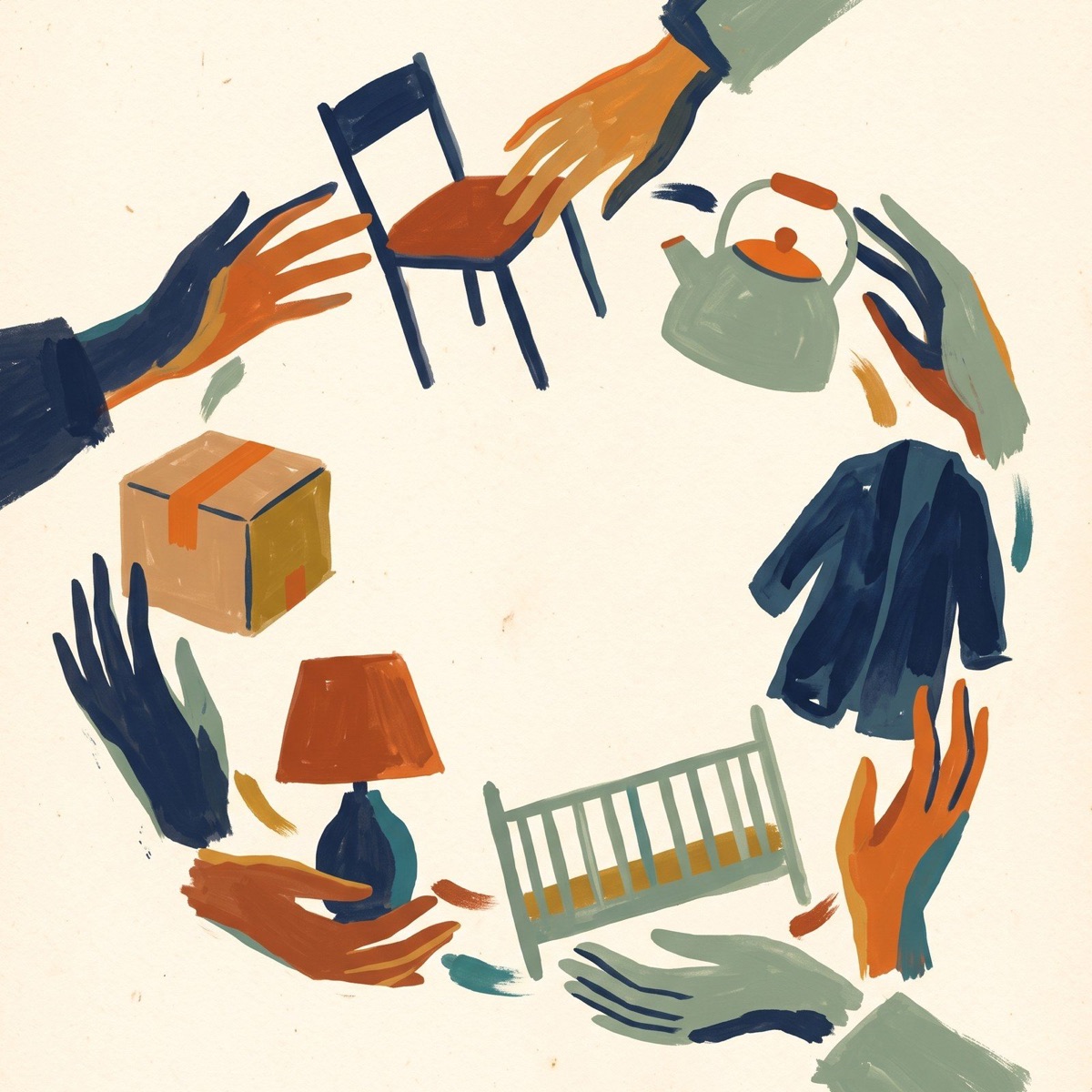
Make giving easier than discarding: one photo, one neighbor, one porch pickup, free. Every design rule traces to published research on why 'free' moves people and why giving rewards the giver.
- 03 Outcome
A free gift economy that started in Akron, Ohio and is now open in every state, with landfill diversion as the built-in second benefit of every rescue.

Project summary
StuffRescue is a free, mission-driven gift economy, incorporated in Ohio as a nonprofit. Neighbors post the usable things they no longer need, and the people nearby who need them rescue them, for free. I founded it and lead it as Executive Director, and I designed the product, its behavioral model and the research program behind it. This is the first of two case studies: it covers the core behavior change. Part 2 covers campaigns.
The behavior we set out to change
Traditional donation asks people to do an errand. Sort the goods, load the car, find a donation center that's open, drop everything off and hope it reaches someone. Every step is friction, and friction decides the outcome. When giving is harder than discarding, a good coffee table goes to the curb and a crib goes to the landfill, while a family a few streets away goes without.
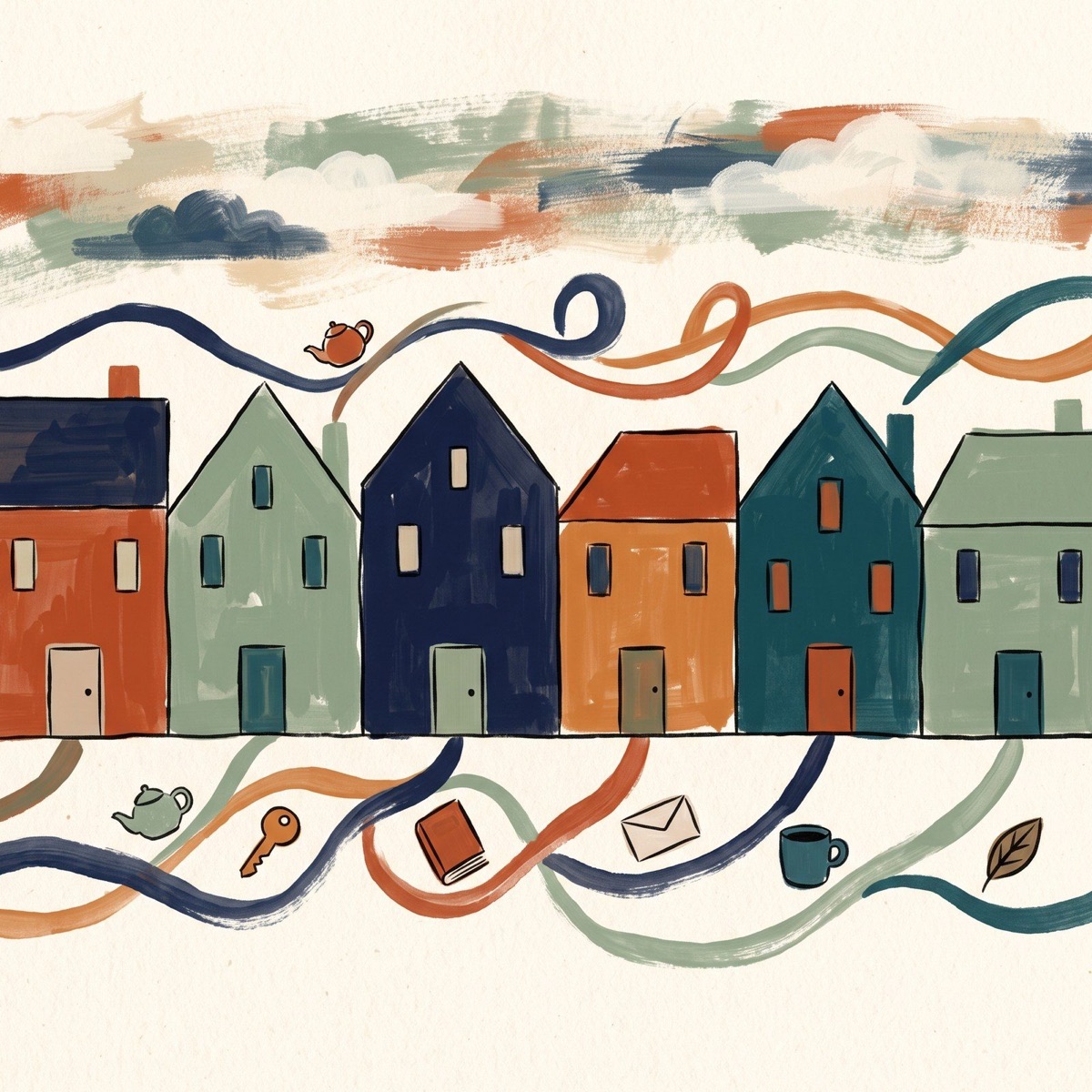
StuffRescue's thesis is that the generosity already exists. The infrastructure doesn't. The design goal was to make giving the path of least resistance: easier than the trash, and done without leaving the house.
The design: one photo, one neighbor, one pickup
- Post from where you are. A photo and a sentence put an item in front of everyone nearby. Listing takes seconds, not an afternoon.
- Local by default. Discovery is by distance, with no groups to join and no codes to share. If it won't fit in a car, it isn't worth a courier.
- A doorstep, not a depot. Porch pickup replaces the drive to a donation center. Nothing is packaged, shipped or warehoused.
- Private by design. Neighbors see a rough area, never an address. The exact spot goes only to the person rescuing the item.
- Rescue, not resale. Nothing is for sale. There's no haggling, no bidding and no "is this still available?". Items move because someone needs them.
Inside the product
The screens in the gallery above are the live product at stuffrescue.org. Each design choice traces back to the behavior we wanted to change.
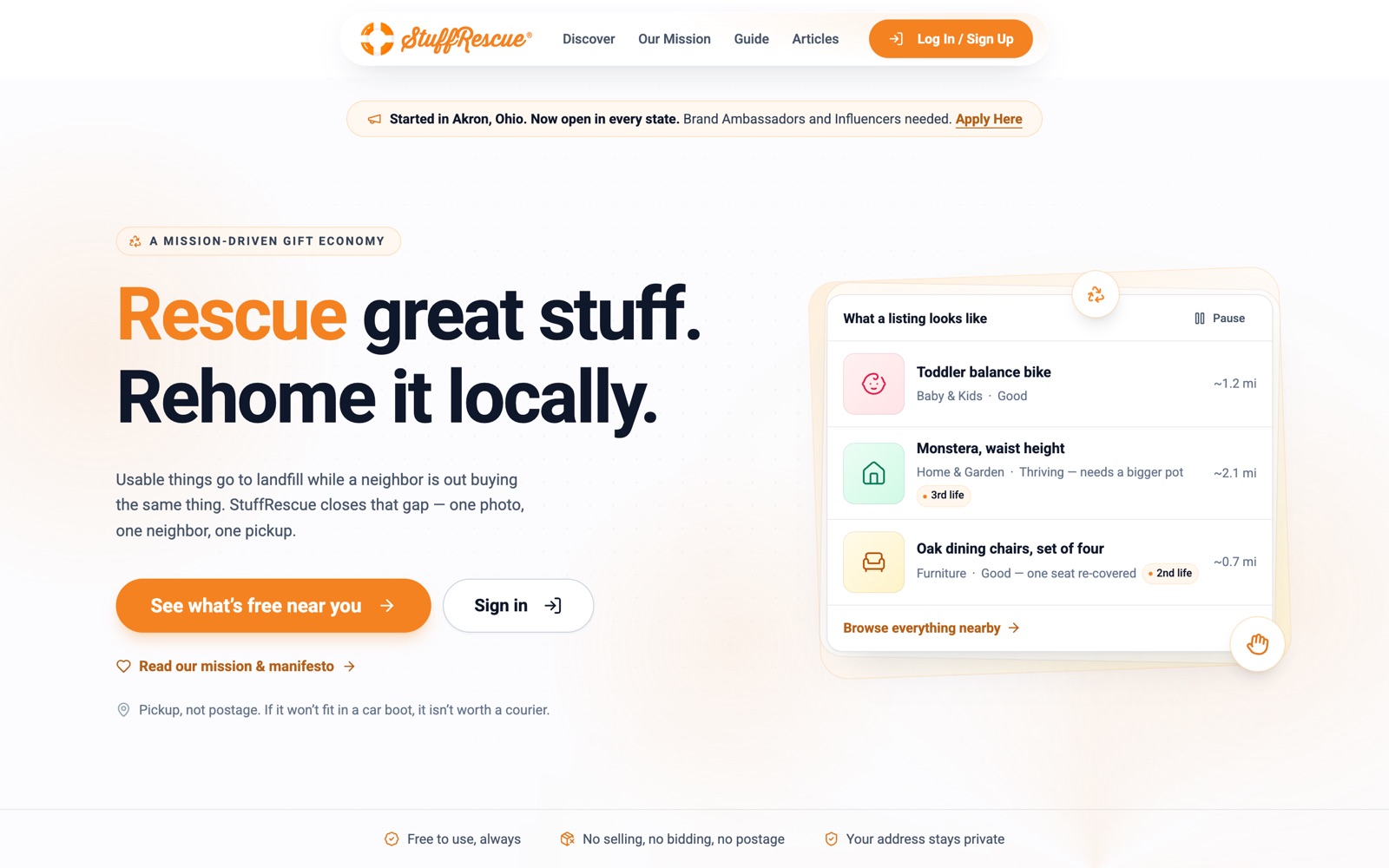
- The listing previews itself. The home page doesn't explain StuffRescue; it shows a live example of what a listing looks like: a toddler bike about 1.2 miles away, a monstera "on its 3rd life," oak chairs with "one seat re-covered." Distance, condition and an item's life count are the three facts that make free feel trustworthy.
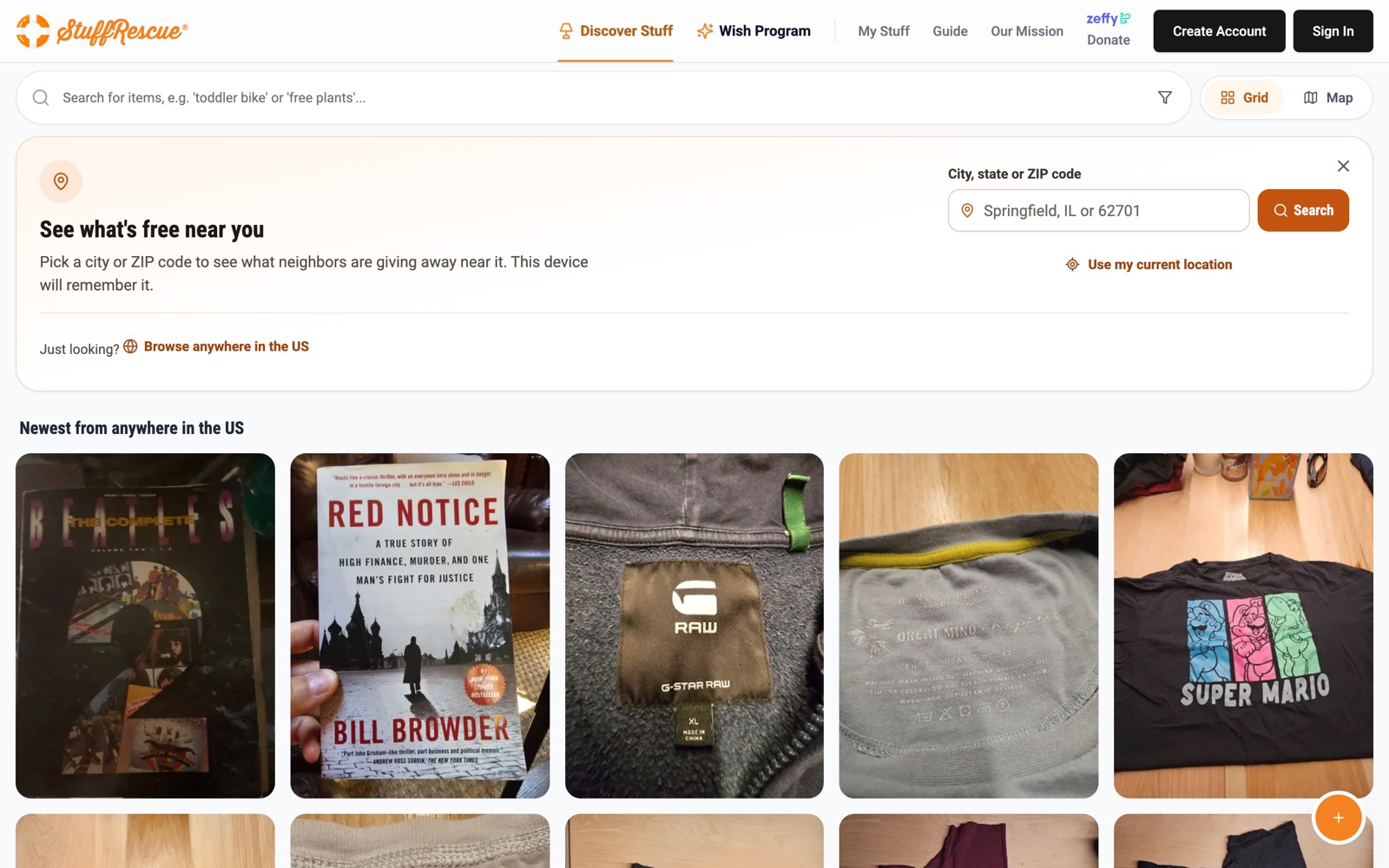
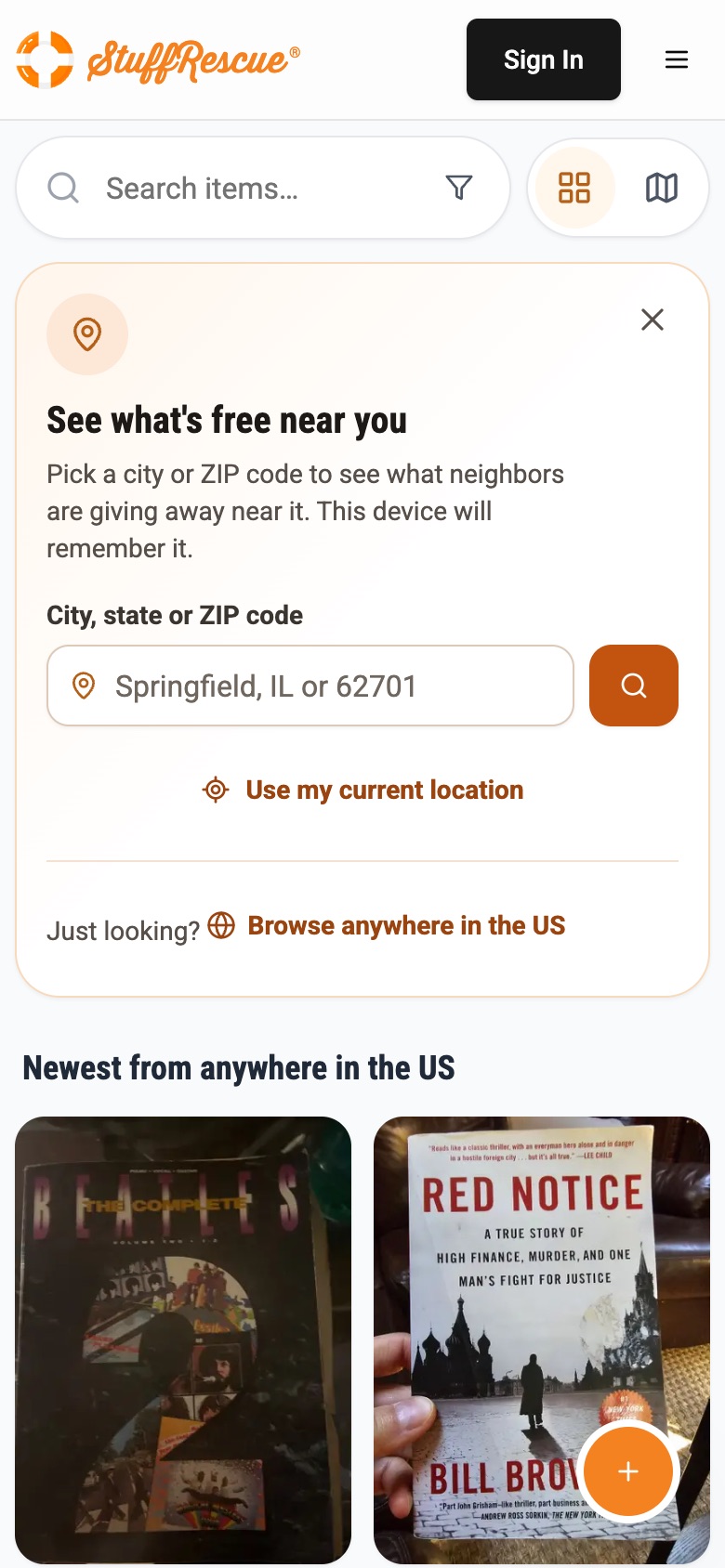
- Location first, account last. Discover opens on one question, "See what's free near you," answered with a city, a ZIP code or the device's location, which the device remembers. Anyone can browse before signing up; an account is only needed at the moment of rescue.
- Condition is never fine print. Every item shows its condition in plain words ("Fair, one arm scuffed"), because the research shows free makes people skim past bad news. Honest condition up front prevents the no-show at pickup.
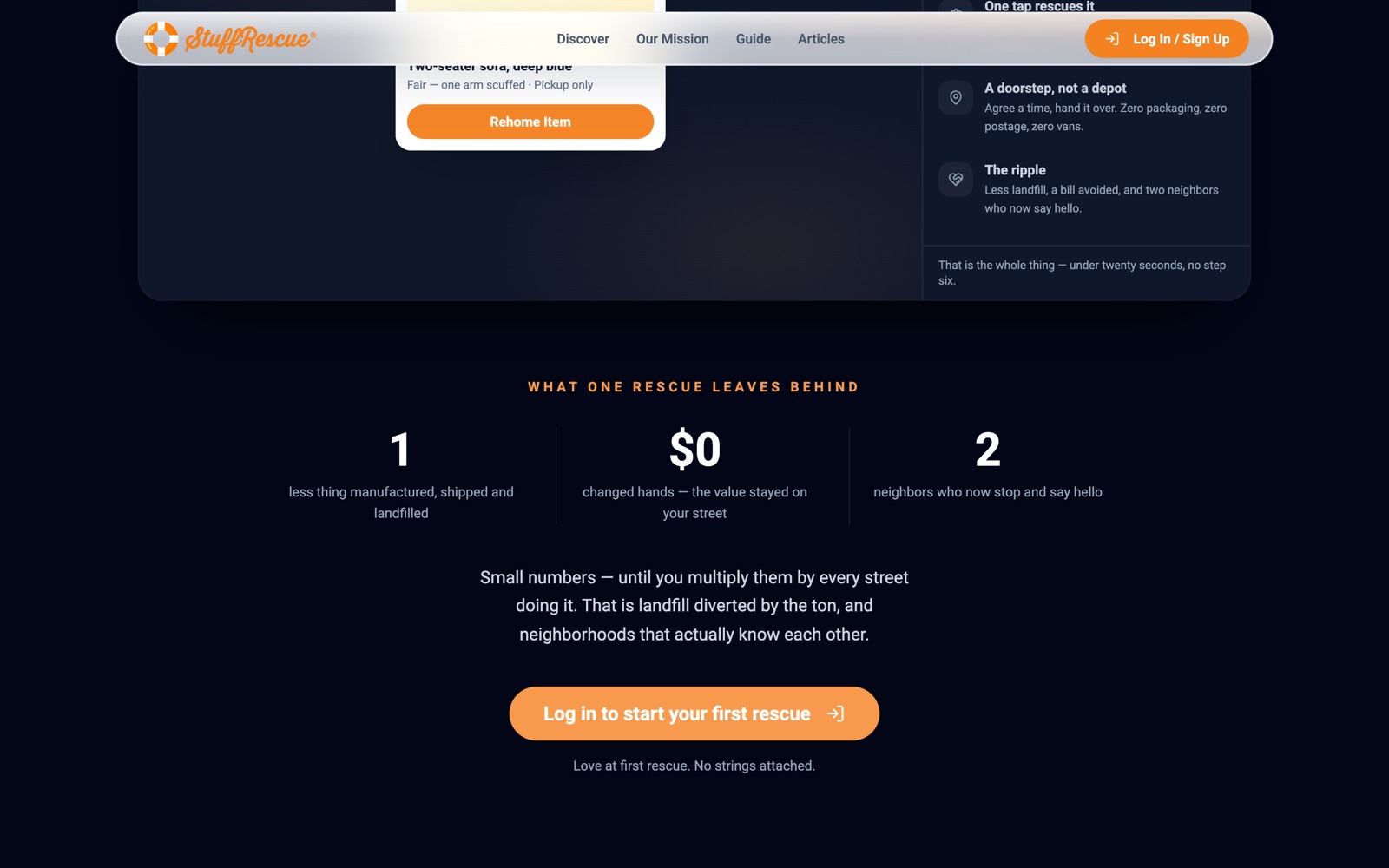
- One tap, one doorstep. The first person to tap "Rehome Item" wins it: no haggling, no "is this still available?". The handoff is arranged as pickup only, and the exact address goes only to the person rescuing the item.
- The impact is part of the interface. After the loop, the product shows what one rescue leaves behind: one less thing manufactured, shipped and landfilled; $0 changed hands, so the value stayed on the street; and two neighbors who now say hello.
- Built for the phone in a garage. The same flows are designed mobile-first, with a floating button to post an item from wherever you're standing.
The power of zero
"Free" isn't simply a low price. It's a different kind of decision. In Shampanier, Mazar and Ariely's work on zero price, demand jumps sharply at exactly zero, driven by positive feeling rather than arithmetic: people choose a free item far more often than the same item at a token price. Koo and Suk's 2022 "boomerang" study found the limit. The zero-price effect is strongest when the incidental costs of time, effort and risk are low, and it reverses when they're high.
That finding became StuffRescue's design law: free works where friction is low, so the product's job is to remove the friction it can and disclose the friction it can't. The research also produced specific build rules:
| Finding | Source | Design rule |
|---|---|---|
| Demand jumps discontinuously at exactly free | Shampanier, Mazar & Ariely, Marketing Science, 2007 | Keep nearby rescues free, with no fees or hoops |
| Free loses power as time, effort and risk rise | Koo & Suk, Marketing Letters, 2022 | Remove coordination friction: porch pickup, pickup windows, clear instructions |
| Free makes people skim past bad news about quality | Chandran & Morwitz, 2006 | Make condition loud: required photos and a blunt condition line before anyone claims |
| Free items are assumed to be low-value | Raghubir, 2004; Palmeira & Srivastava, 2013 | Show each item's estimated value, so free never reads as junk |
| Free works hardest on modest, everyday goods | Baumbach, 2016; Hossain & Saini, 2015 | Design for the long tail of household goods, which is where landfill diversion lives |
The science of giving
The second literature explains why givers come back. In a Science study by Elizabeth Dunn, Lara Aknin and Harvard Business School's Michael Norton, spending on others raised people's happiness and spending on themselves did not. Their follow-up across 136 countries found the link between giving and happiness everywhere, and strongest among people with lower incomes. Neuroimaging shows why: charitable giving activates the brain's reward pathway (Moll et al., PNAS, 2006), and voluntary giving activates it more than a mandatory transfer of the same amount (Harbaugh, Mayr & Burghart, Science, 2007). A 2019 meta-analysis of 36 fMRI studies confirmed the reward response, and a 2022 review of pre-registered experiments found the emotional benefits of giving "robust and replicable in large samples."
Those findings shaped the product's core loop:
- Post. A photo and a line, in seconds.
- Rescue. A neighbor claims it, free.
- Gratitude. The giver sees where the item landed and what it meant. This is the reward the research describes, so it's designed as a moment, not a courtesy.
- Again. The rewarded giver posts the next thing.
Because voluntary giving is what lights up the reward system, the platform protects choice. No one has to prove hardship to receive, and no one is obligated to give.
The second benefit: the environment
Every rescue is also one less thing manufactured, shipped and landfilled, and no money leaves the street. The charitable outcome and the environmental outcome are the same transaction seen from two sides, so StuffRescue counts both: items rescued and goods kept out of the waste stream.
What we claim, and what we're testing
The research supports the design. It doesn't prove the product. No published study has tested whether a platform built around this loop keeps givers coming back better than a neighborhood social group. That's StuffRescue's own hypothesis to prove, and the product is instrumented to measure it, starting with whether a gratitude moment increases repeat giving.
Skills: Product Strategy, Behavioral Design, UX Research, Service Design, Nonprofit Leadership.