Social Enterprise, Platform Design, Community Giving
StuffRescue Part 2: Campaigns, Crowdfunding for Things
Campaigns take StuffRescue's giving technology and point it at a specific need, the way GoFundMe does for money, except the community gives the things themselves: jackets into a coat drive, or one kitchen item each for a family new to the parish.
 StuffRescue
- 01 Problem
Crowdfunding raises cash, but many needs are concrete: a coat, a crib, a kitchen. Organizations that serve people in need won't adopt a tool that forces them to change their routines, and the people they serve deserve privacy.
- 02 Approach
A campaign is one page, one link and one QR code that rally a whole community around a specific list of goods. It's goods-only, private by default, and designed so help is never for sale.
- 03 Outcome
Churches, shelters, schools, senior communities, veterans' groups and case agencies can ask for exactly what their people need without naming them, and neighbors can give an item in minutes from home.

Project summary
Part 1 made giving easy: one photo, one neighbor, one porch pickup. Part 2 makes giving purposeful. Campaigns let a person or an organization gather goods for a specific need and invite the whole community to help, the way GoFundMe works for money, except the community gives the items themselves.
Two examples show the range:
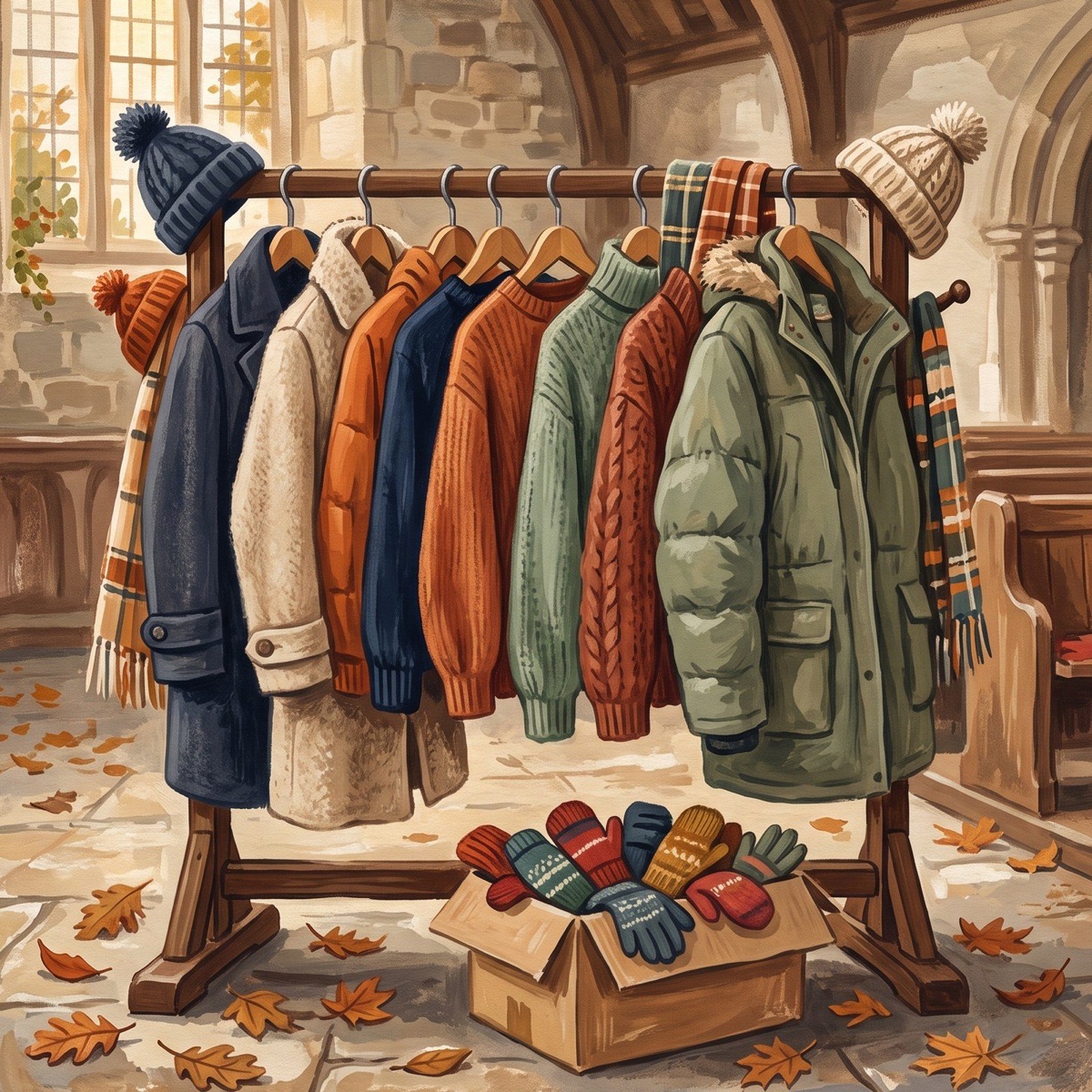
- A jacket drive. A school or a veterans' post opens a coat campaign before winter. Neighbors see it, check the sizes still needed, and give a jacket from their closet into the drive.
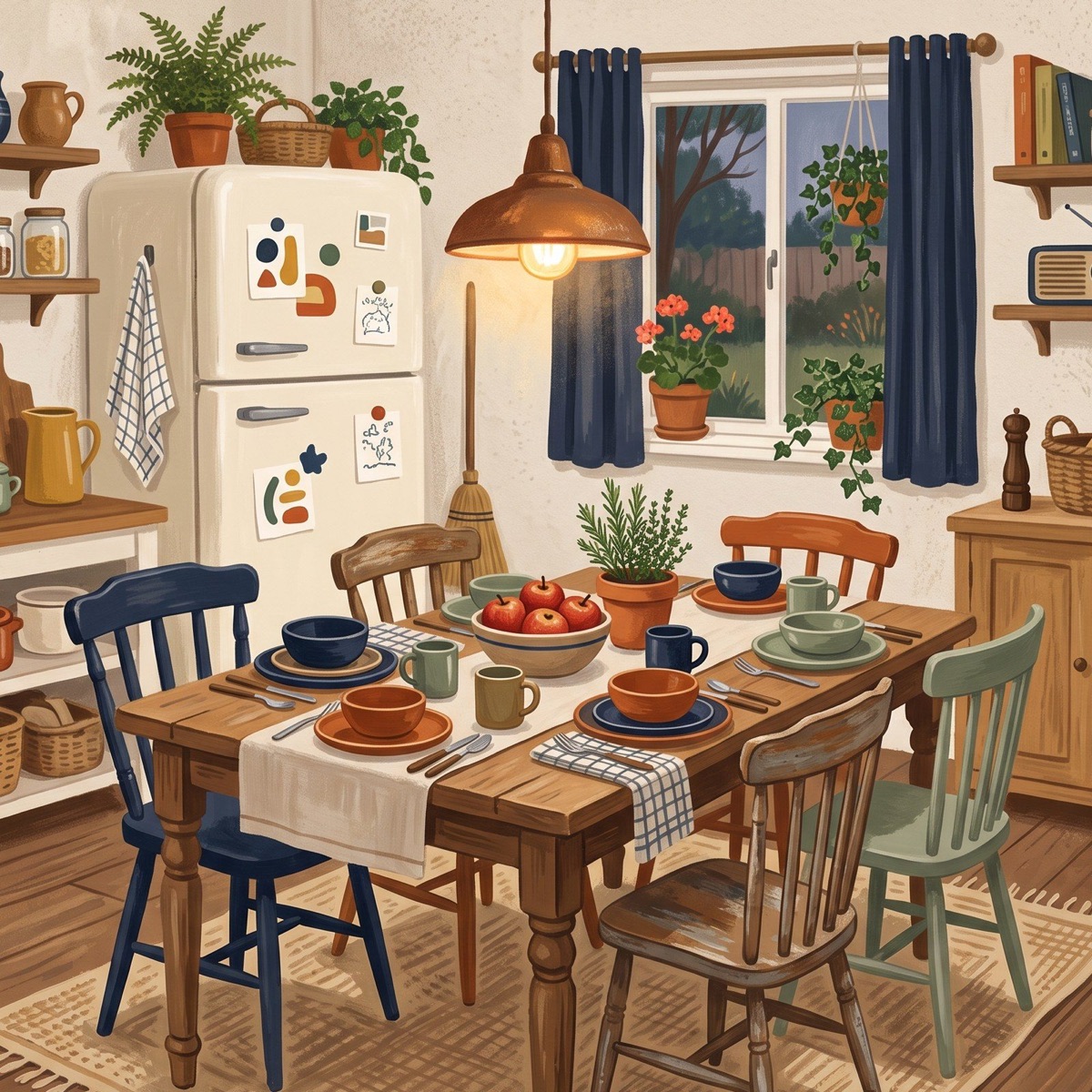
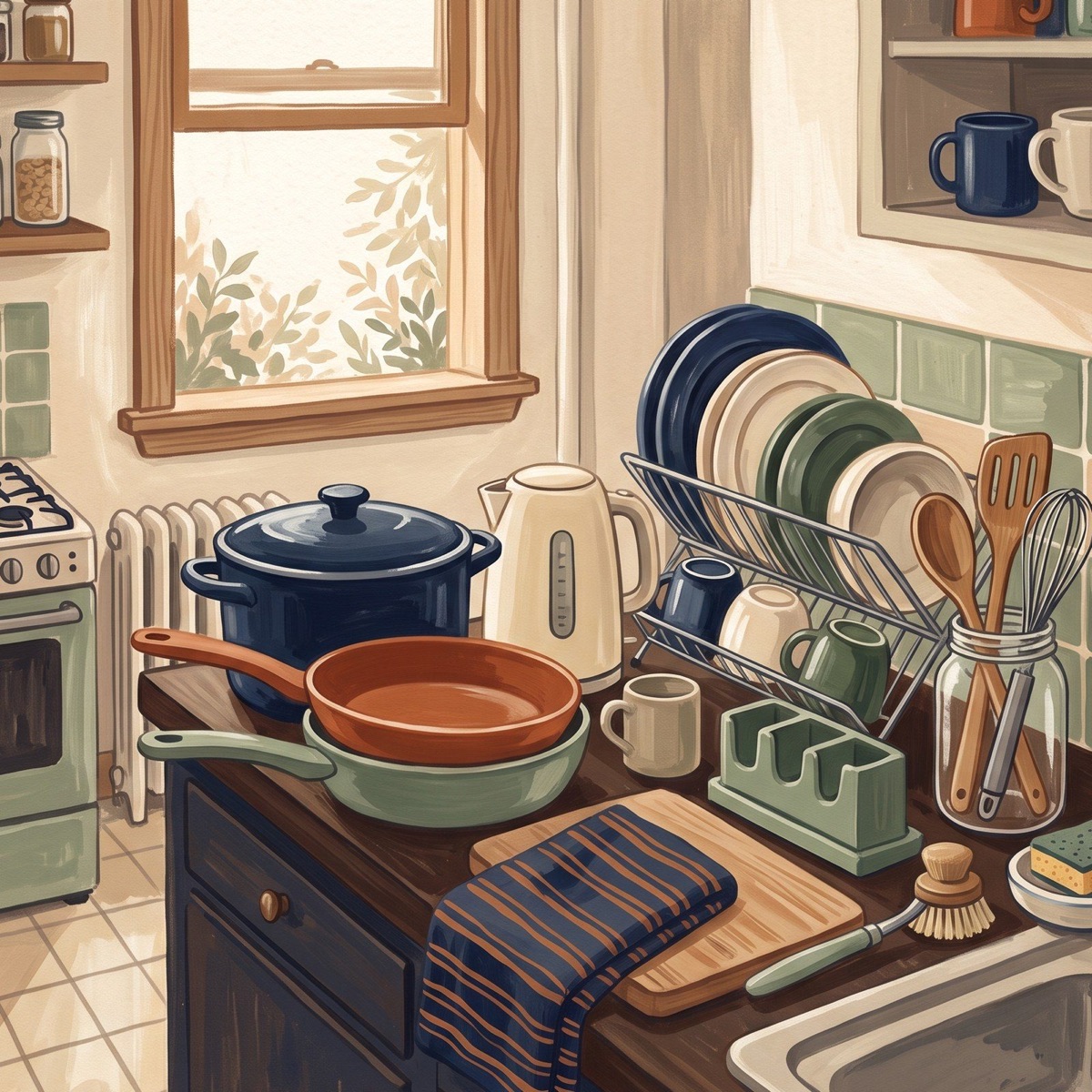
- A kitchen for a new family. A church welcoming an immigrant family to the parish lists everything a kitchen needs. The pastor shares one link and asks everyone to contribute one item. A week later, the family has a working kitchen, and dozens of neighbors had a hand in it.
The problem with existing tools
Cash crowdfunding is powerful, but it turns every need into money, and the family still has to go shopping. Donation drives work, but they run on flyers, bins and spreadsheets, and nobody can see what's still missing. Outreach to organizations surfaced a harder truth: many won't change their routines to adopt a new tool, however good it is. Campaigns had to fit how a church, a shelter or a school already works.
The design
- One page, one link, one QR code. Everything a campaign is gathering lives in one place, ready for a bulletin, a newsletter or a group text.
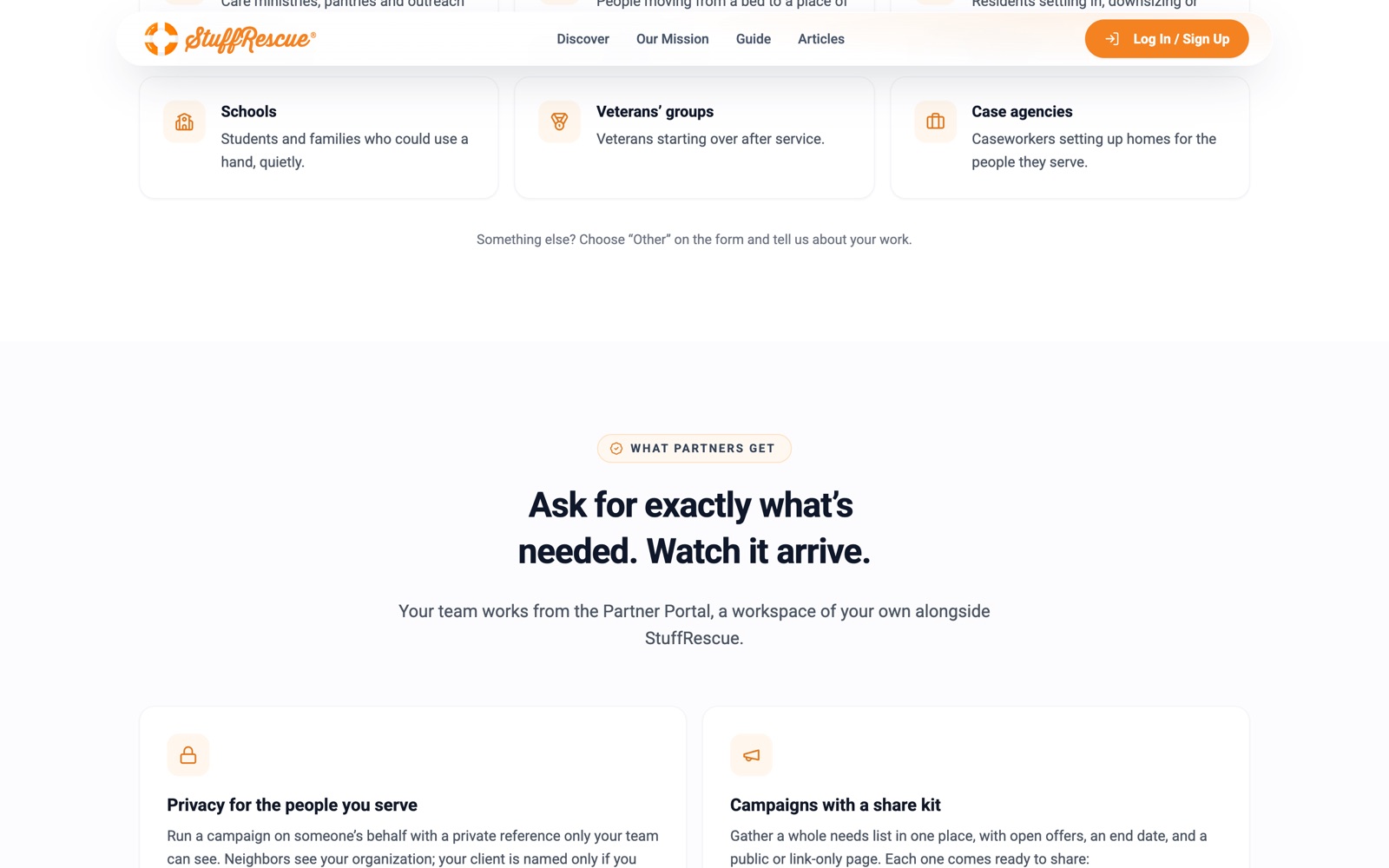
- Ask without naming. Organizations join as Wish Partners and ask on behalf of the people they serve. Neighbors see the organization. The person being helped is named only with their permission.
- No badges of need. A wish looks like every other post on StuffRescue. Nothing marks a family as needy, and no one in need ever pays.
- One shared inbox. Every donor conversation lands in one place, so whoever is on shift can answer.
- Built on the same loop. Campaign gifts move through StuffRescue's existing flow (post, rescue, gratitude), so a giver who joins for a coat drive often stays to give again.
Inside the product
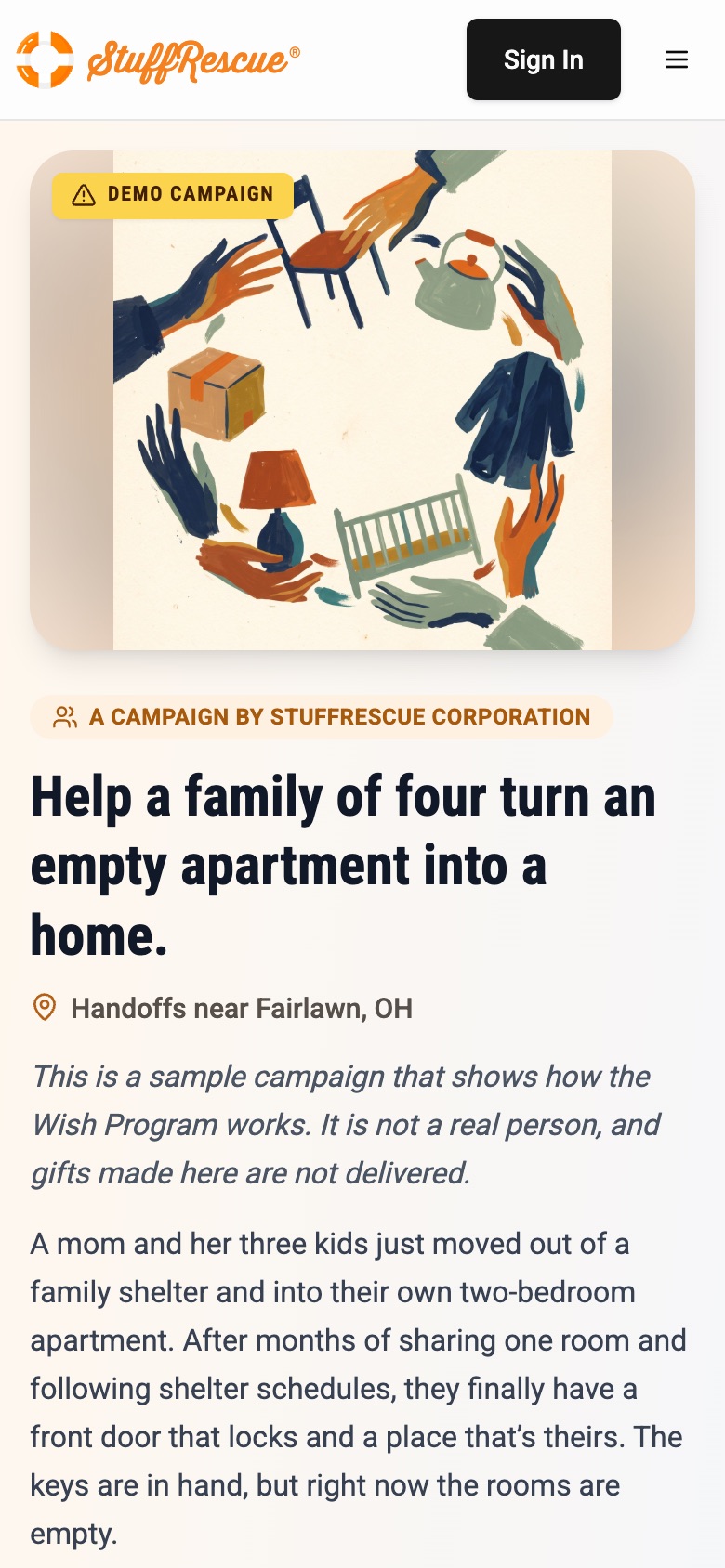
The gallery opens with the live Wish Program at stuffrescue.org. The campaigns shown there are labeled demo campaigns: samples that show how the program works, not real families.
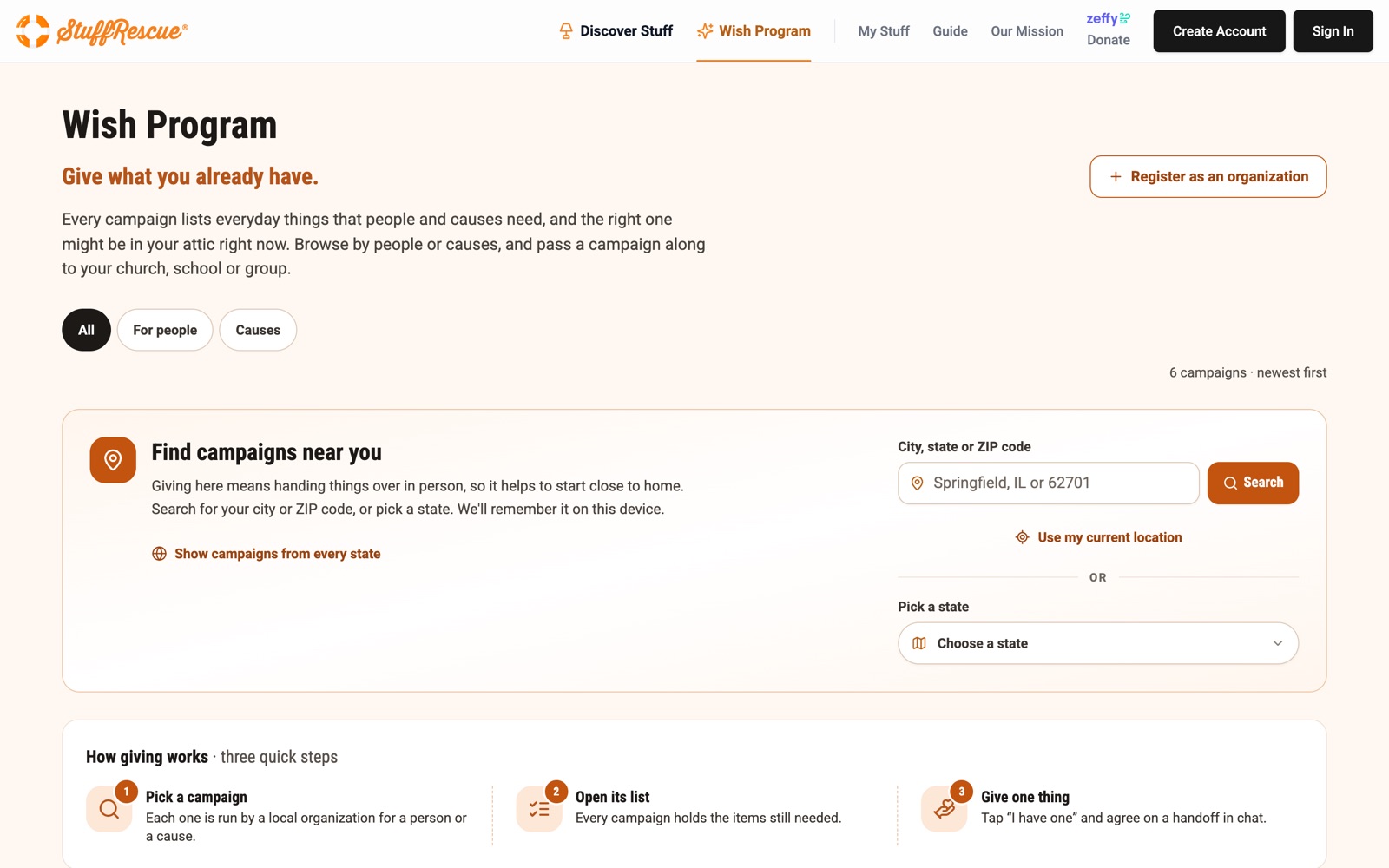
- "Give what you already have." The Wish Program's promise is the design brief in one line. Campaigns can be browsed by people or by causes, and found by city, ZIP code or state, because giving here means handing things over in person.
- Three steps, no more. Pick a campaign, open its list, give one thing. Giving is an "I have one" tap on a specific item, followed by a handoff agreed in chat.
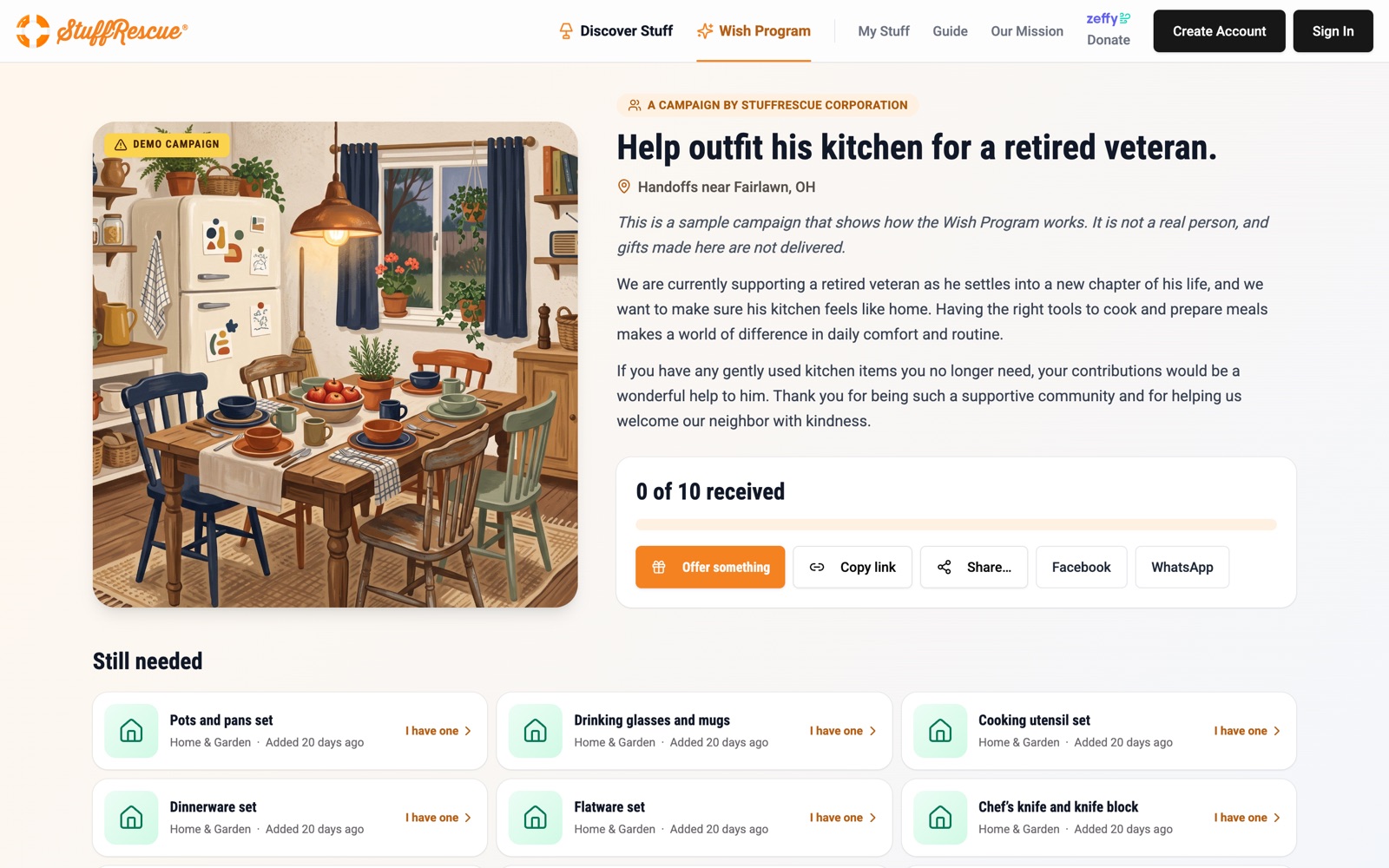
- A campaign is a needs list, not a fundraiser. Each campaign page shows the story, a progress count ("0 of 10 received"), and a "Still needed" list where every item has its own "I have one" button. Progress is measured in things, not dollars.
- A share kit on every page. Copy link, share, Facebook and WhatsApp sit beside the main action, so a pastor or a teacher can pass a campaign to their whole community in seconds.
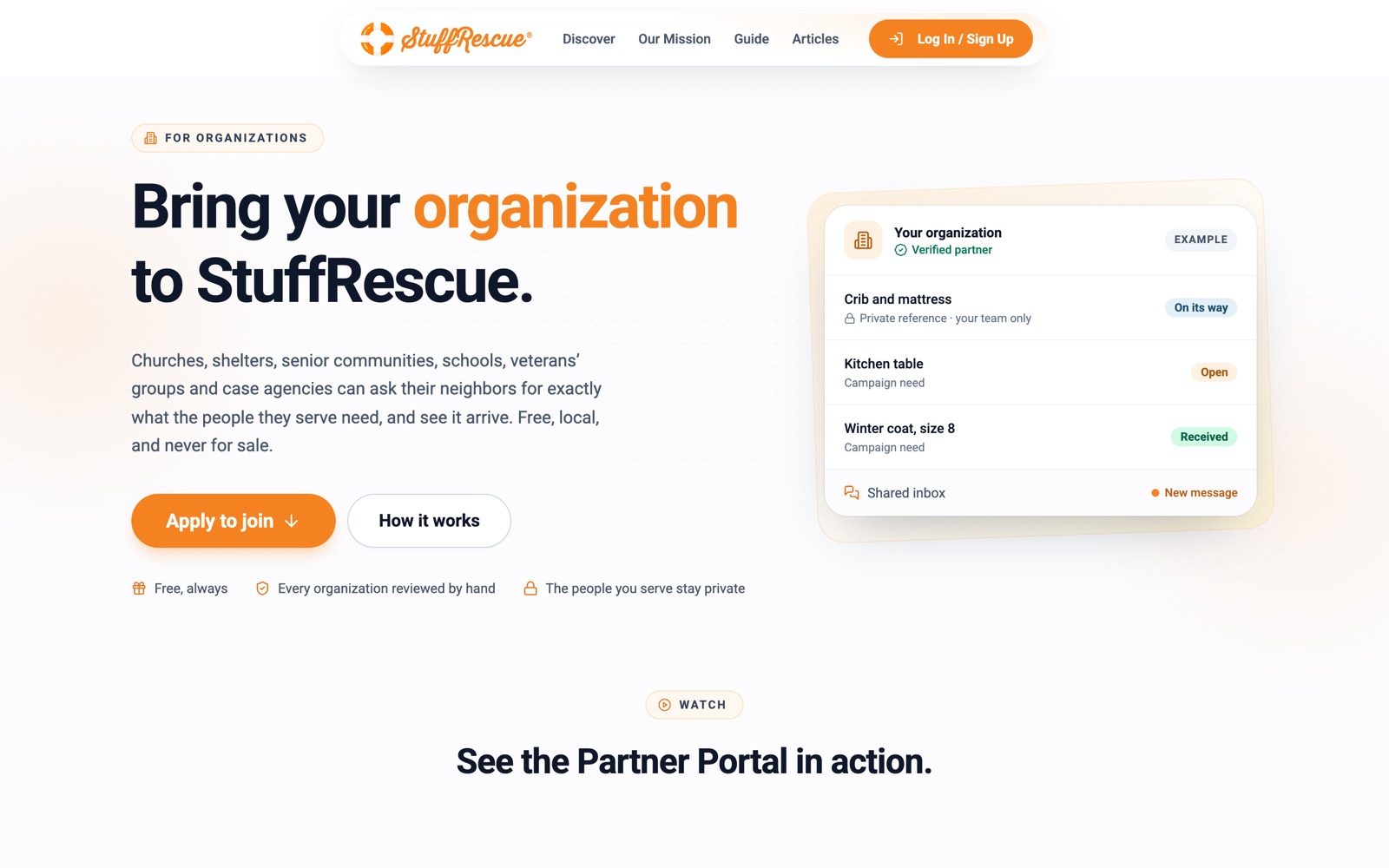
- The Partner Portal. Organizations work from a verified workspace that tracks each need from Open to On its way to Received, keeps a private reference to the person being helped that only their team can see, and gathers every donor conversation in one shared inbox. Every organization is reviewed by hand, and partnership is free.
The first cause areas are where a rescued item most often changes the course of a life: children in poverty, families leaving domestic violence, young people in foster care, and veterans starting over.
Designing so help is never for sale
The next step opens campaigns to individuals: anyone who knows a person or family in need can nominate them. Three principles shape that design.
- Nominate, don't designate. A nominator proposes a household. StuffRescue confirms consent directly with the recipient and decides against published, needs-based criteria.
- Goods only. Campaigns gather household goods. No cash is raised for, or paid to, any individual.
- Pay it forward. Nominating is free. Only after a campaign is fulfilled is the nominator invited, never required, to make a gift that funds screening for the next family.
The timing of that gift is deliberate, and research-backed. In a Science study by Gneezy, Keenan and Gneezy (2014), people were 80% more likely to give when told overhead was already covered. Asking at the start would make a nominator pay overhead before anyone was helped. Asking at the moment of success turns the same gift into direct help for a family they haven't met, and it borrows a habit people already have: paying for the coffee of the person behind them in line.
Safety is built into the software, not left to policy: two screening lanes (trusted professionals such as caseworkers, clergy, teachers and nurses verify once; everyone else needs a vouch), campaigns that are private by default with no addresses shown, domestic-violence campaigns that run only through a shelter or advocate, and no identifiable minors.
Why it matters
Campaigns turn StuffRescue from a place to give things away into a way for a community to answer a specific need together. The same design principles carry through from Part 1: remove friction, protect dignity, keep giving voluntary, and let the giver see the difference they made.
Skills: Product Strategy, Platform Design, Service Design, Trust & Safety Design, Nonprofit Leadership.